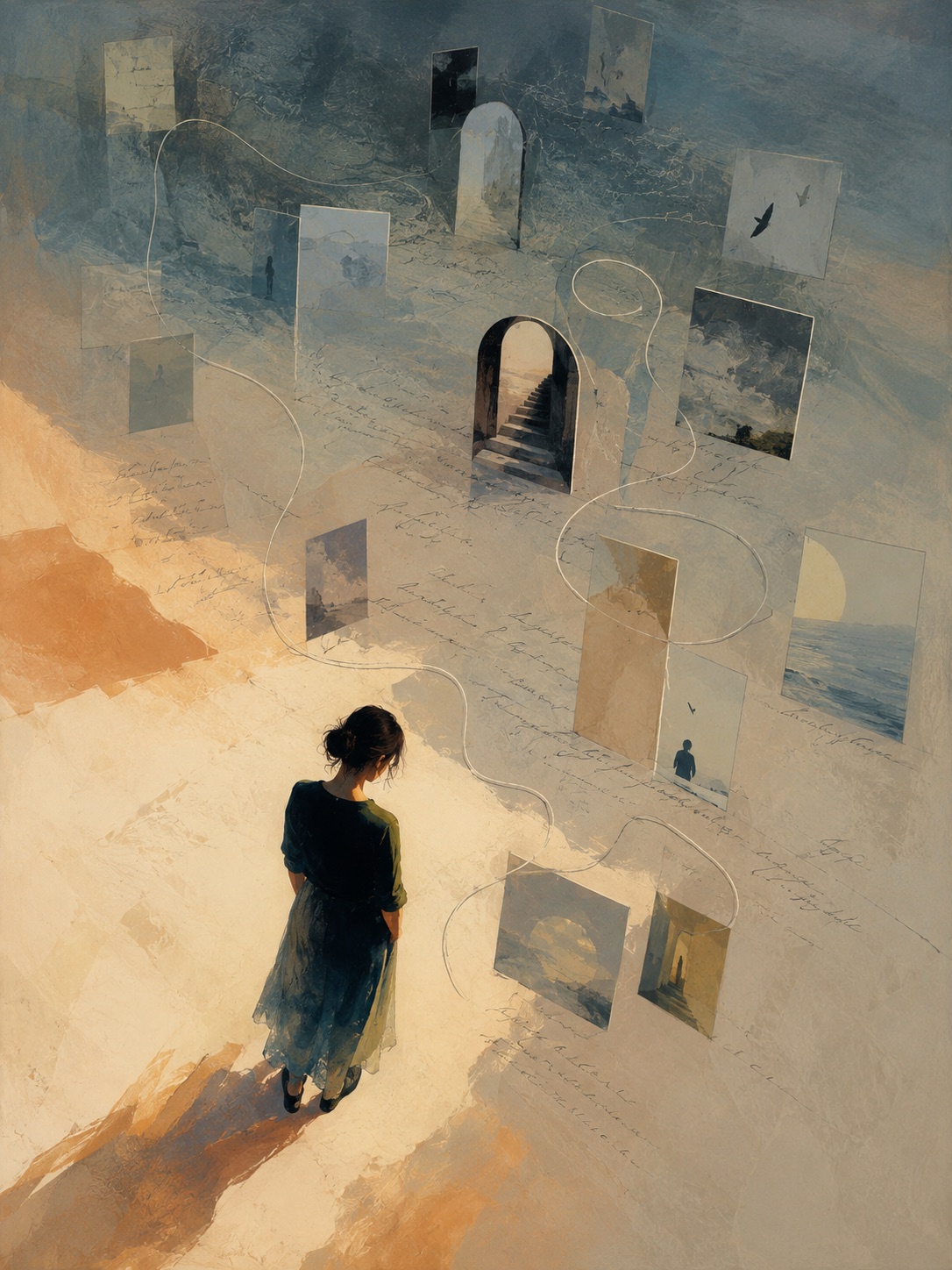
When your mind feels too full, do not try to write everything at once. Start by separating signal from pressure, then choose the one sentence that feels most alive.
The point is not to empty your head perfectly. The point is to give one thought enough shape that you can see what is actually asking for your attention.
Why A Full Mind Is So Hard To Write From
When your head is crowded, a blank page can feel almost rude.
It asks:
What are you feeling?
But the honest answer might be:
Too many things.
In that state, journaling can turn into either a messy dump or a performance. You write everything and feel no clearer, or you try to sound more self-aware than you actually feel.
You do not need to begin with insight. Begin with sorting.
First, Separate Signal From Pressure
Write three headings:
- What is active
- What is parked
- What is not mine
Under what is active, write what feels loud right now. Not necessarily urgent. Just loud enough that it keeps interrupting everything else.
Under what is parked, write what you cannot solve today but keep remembering.
Under what is not mine, write the pressures, expectations, moods, or opinions you may be carrying from other people. This does not mean they do not matter. It means they may not need to run the whole room inside your head.
Keep the list plain. This is not the real entry yet. It is a way of clearing enough space to find the entry.
For example:
What is active
- the message I have not answered
- feeling behind
- wanting quiet
What is parked
- the decision I cannot make tonight
- the appointment I need to schedule
- money worries I need to revisit later
What is not mine
- the pressure to reply perfectly
- someone else's urgency
- the mood I picked up from a tense room
Once the noise is separated, the real sentence is usually easier to hear.
Then Choose The Sentence With Charge
After the list, look for the sentence with the most charge.
It may not sound impressive. It may sound almost too simple:
I feel behind.
Or:
I am tired of being available.
Or:
I do not know why this bothered me.
That sentence is enough. Use it as the first line of the real entry.
The crowded mind often wants a full explanation before it lets you begin. Writing works in the other direction. One clear sentence gives the rest of the thought somewhere to land.
A Five-Minute Ritual For A Crowded Head
Set a timer for five minutes.
Start with the charged sentence and answer these questions:
- What keeps interrupting everything else?
- What am I pretending is fine because I do not have time to feel it?
- What feels urgent but may not actually be mine?
- What would I write if nobody needed me to explain it well?
- What is the one thing I keep circling but not naming?
Then stop.
When your mind is full, it is tempting to cross-examine yourself.
Why am I like this?
Why can't I keep up?
Why do I always do this?
Those questions usually make the page harsher. Try softer precision instead:
What is asking for my attention right now?
That keeps the writing clear without making it cruel.
Where Antena Fits
Antena is built for the moment when writing something down should lead somewhere.
When everything has equal weight in your head, Antena helps one honest entry come back with form. You write what is active. Antena returns the entry as a painting and a daily insight, so the thought becomes something you can look at instead of more text to manage.
Over time, weekly letters help connect what keeps returning across your entries.
If your mind feels too full, start smaller than you think. One honest sentence is enough.
Antena turns honest writing into paintings, daily insights, and weekly letters.

FAQ.
What should I journal when I have too many thoughts?
Start by sorting thoughts into three places: what is active, what is parked, and what is not mine. This helps separate signal from pressure before you choose one sentence to write from.
Is thought dumping enough?
Thought dumping can be useful, but it can also leave everything in a blur. If dumping does not help, look for the one sentence inside the noise that feels most alive.
How do I journal without making myself feel worse?
Use precise questions instead of harsh ones. Instead of "Why am I like this?", try "What is asking for my attention right now?"