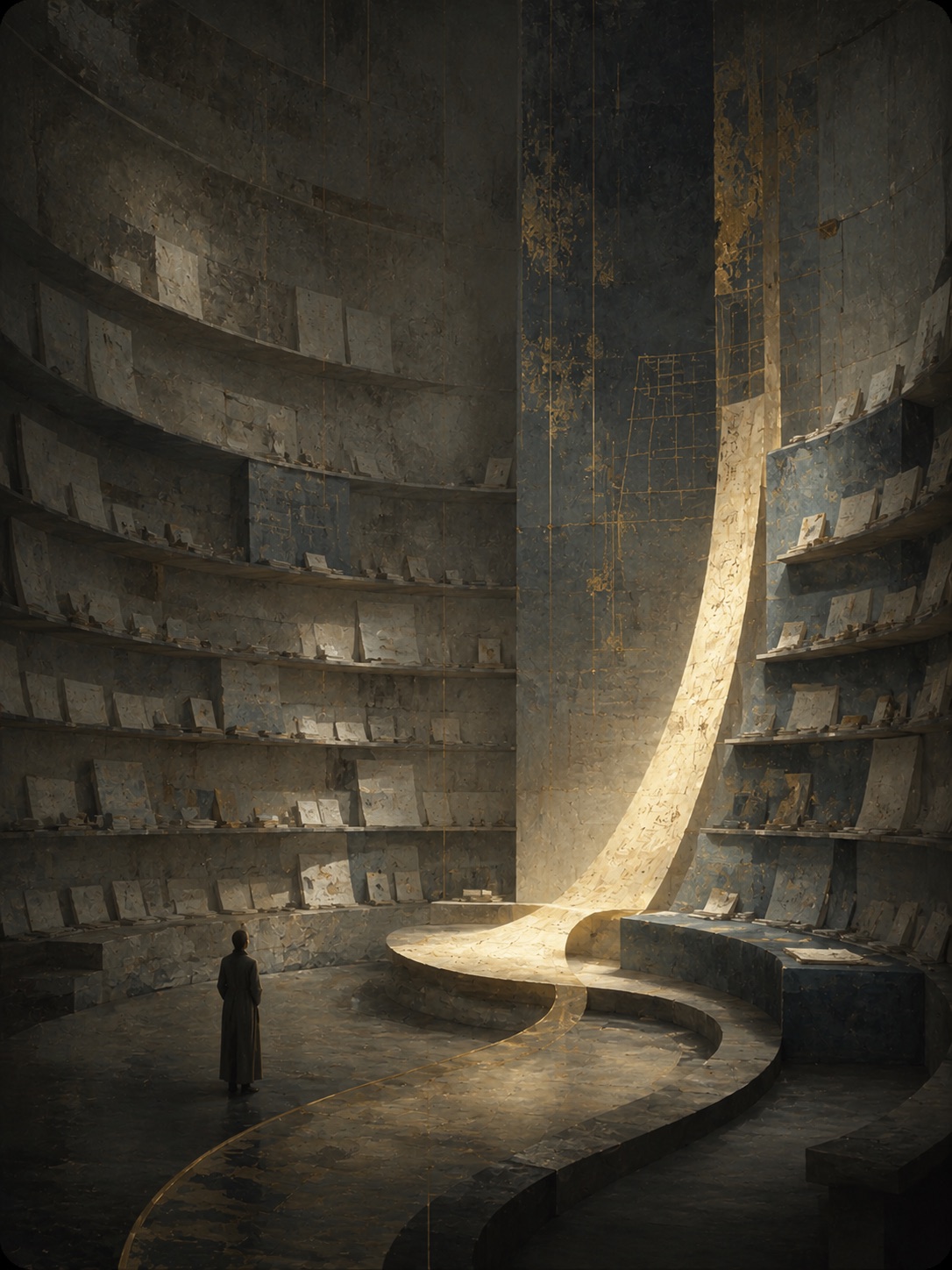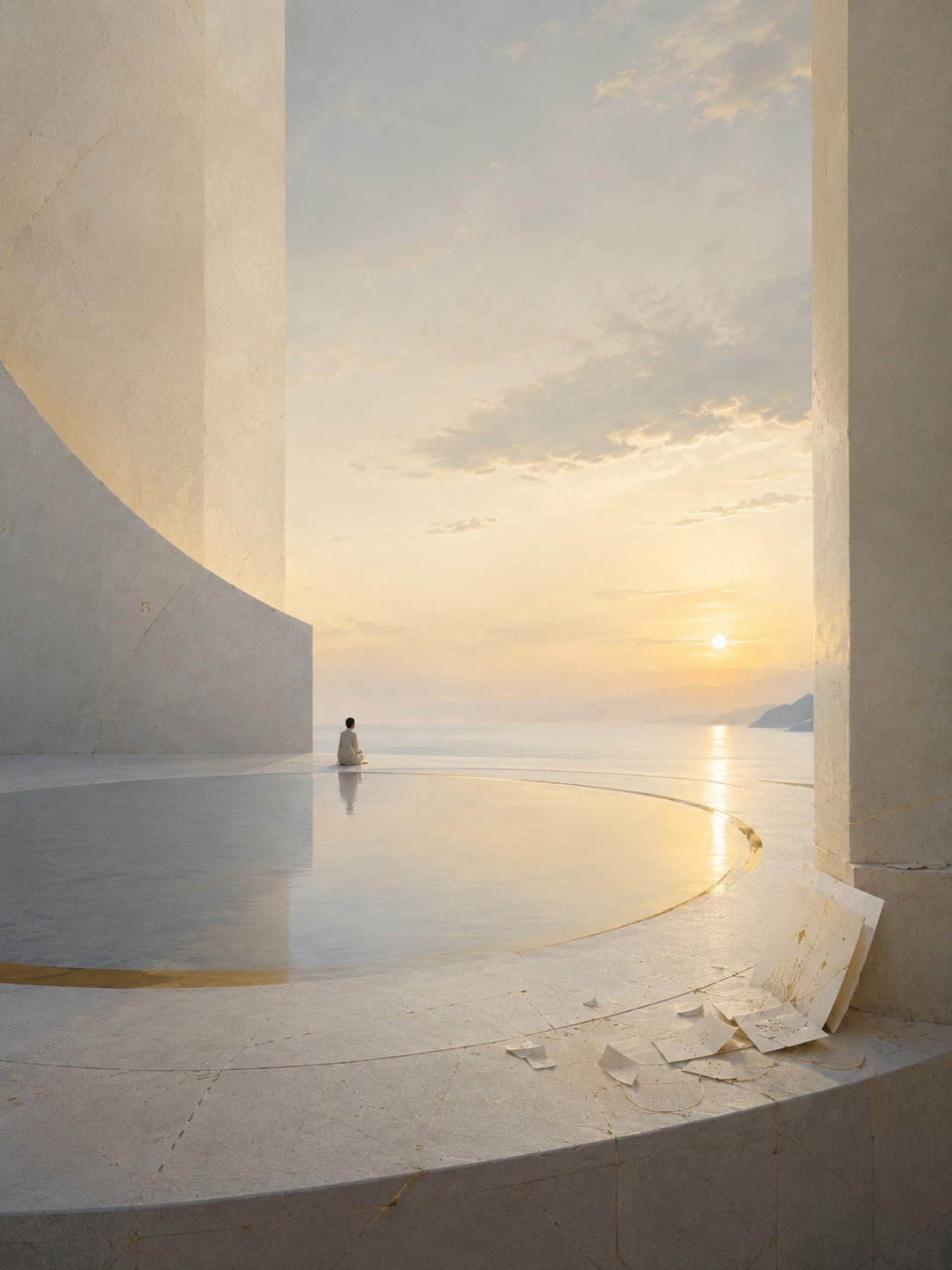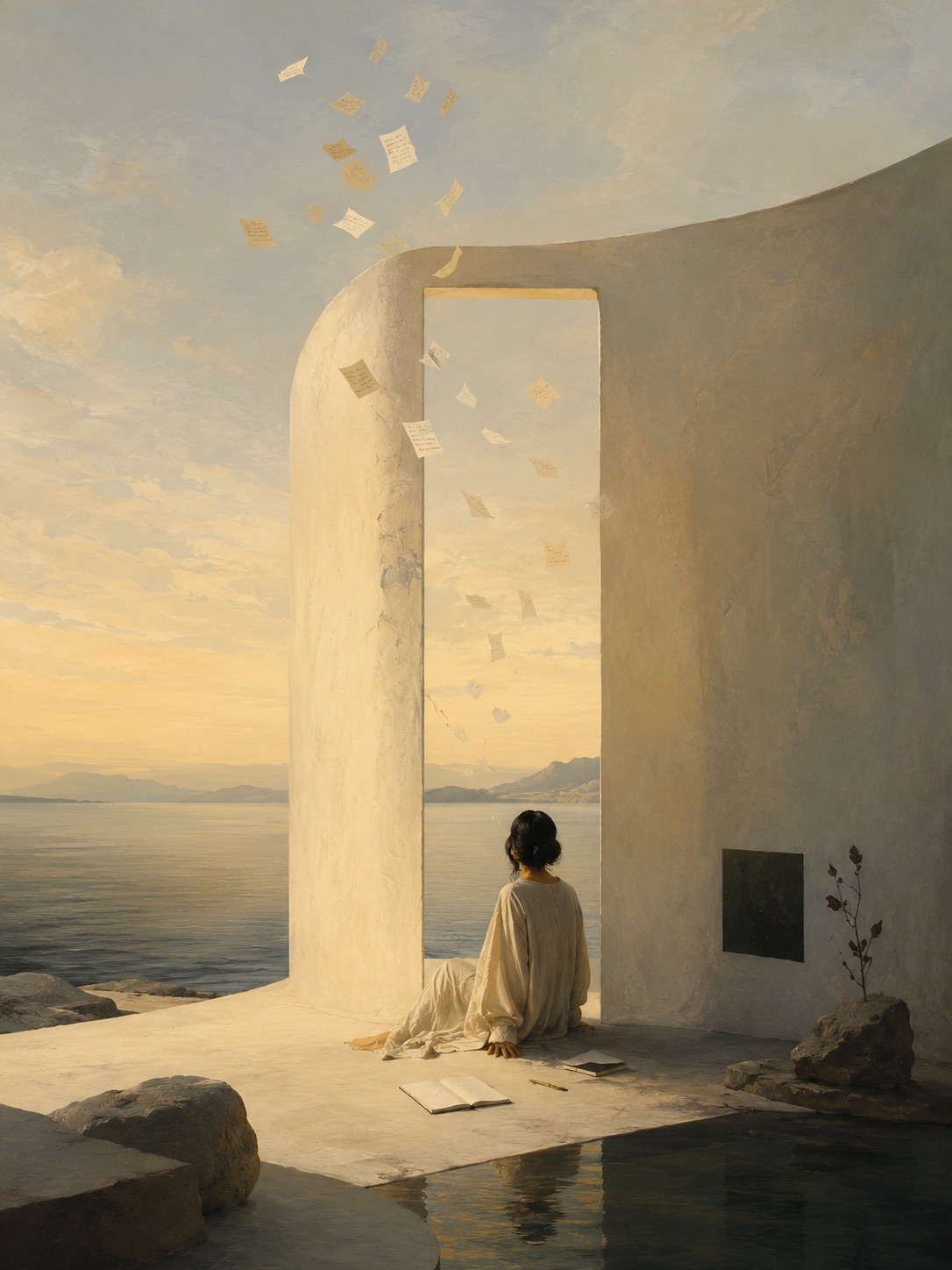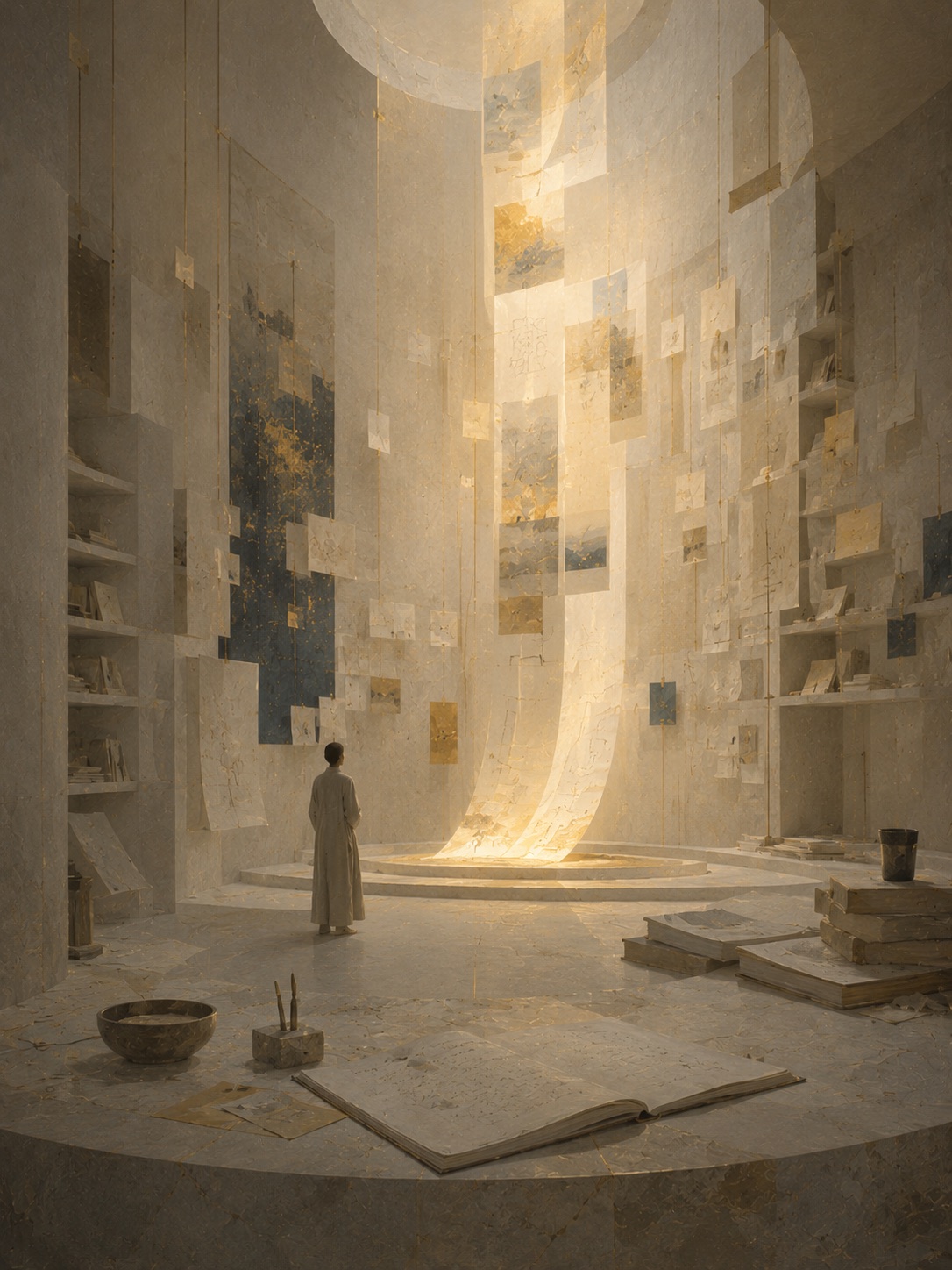
A visual journal is a journal that uses images alongside words to help capture what an entry felt like, not only what happened. It can include drawings, photos, colors, collage, paintings, or digital images connected to the writing.
The point is not decoration. The point is recognition. A visual journal gives an entry another way to be remembered and returned to.
Visual Journaling Is Still Journaling
A visual journal does not replace writing. It gives writing another form.
In a traditional diary, the entry usually lives as text. In a visual journal, the text is paired with an image, color, texture, or scene that helps hold the feeling of the entry.
The image should not sit on top of the writing like decoration. It should come from the writing, or at least answer it.
For example, a hard conversation might become a dark room with one open door. A transition might become a path through fog. A quiet day might become a small window of light. A feeling you cannot name might become a shape before it becomes a word.
The image does not need to explain everything. It gives the entry a second way to be held.
Why Images Help Reflection
Some thoughts are easy to summarize.
Others are atmospheric.
You might remember the feeling of a week before you remember the details. You might not know how to name a mood, but you know whether it felt dim, crowded, sharp, quiet, heavy, open, or unfinished.
That is where visual journaling can help.
An image can make an entry easier to return to because it carries the atmosphere quickly. You do not have to reread every sentence to remember the emotional shape of what you wrote.
This is why visual journaling can feel different from simple tracking. It is less about collecting data and more about giving the writing a form you can recognize later.
Visual Journaling Vs A Traditional Diary
A traditional diary is usually organized around written entries.
A visual journal adds another layer. It can pair writing with an image or visual form, organize memories by feeling or pattern, and make entries easier to remember through mood rather than rereading alone.
Neither is better for everyone. The question is what helps you return to yourself more clearly.
Visual Journaling Is Not The Same As Making Pretty Pages
Visual journaling can become aesthetic very quickly. That is not automatically bad, but it can miss the point.
If the image is only there to look good, the entry can become a performance. The stronger version is quieter: write first, then let the image answer what the writing actually carried.
A useful visual journal page does not need to be beautiful. It needs to feel connected.
How To Start A Visual Journal Without Being Artistic
You do not need to be artistic.
Try this:
- Write one honest paragraph.
- Underline the sentence with the most charge.
- Choose one image, color, texture, or scene that matches that sentence.
- Add one line: "This image fits because..."
- Return later and ask what the image helps you remember.
The image should serve the writing. If it becomes only aesthetic, it can lose the emotional thread.
Where Antena Fits
Antena is a visual journaling app built around honest writing.
You write an entry. Antena gives it back as a painting and a daily insight. Over time, weekly letters help connect what keeps appearing across your entries.
The painting is not the whole product. It is the first return.
The ritual is:
write -> receive -> continue
That distinction matters. Antena is not trying to make random images for your mood. The visual layer begins with what you wrote.
If you want a journal that does more than store words, visual journaling may be the right direction to explore.
Antena turns honest writing into paintings, daily insights, and weekly letters.

FAQ.
What is a visual journal?
A visual journal is a journal that combines written reflection with images, colors, scenes, or visual forms that help capture the feeling of an entry.
Do I need to draw to keep a visual journal?
No. A visual journal can use photos, colors, collage, paintings, or digital visuals. The important part is that the image connects to the writing.
Is visual journaling the same as scrapbooking?
Not exactly. Scrapbooking often preserves events or memories. Visual journaling is more focused on reflection: what something felt like, what it meant, or what keeps returning.
Can a visual journal be digital?
Yes. A digital visual journal can combine written entries with images, paintings, or other visual returns.
How does Antena use visual journaling?
Antena turns honest writing into paintings, daily insights, and weekly letters. It is designed so the visual layer comes from the writing, not from decoration alone.